
From self-healing biomaterials to autonomous robotic swarms, discover why the next Longitude Prize must be dedicated to reinventing how - and what - we build.
Bringing up the property market in any sort of small talk situation is a sure way to spark animated conversation and much consternation. Everyone has a terrible story: the time they were caught up in a seven-party purchasing chain, the time the seller refused to vacate the premises, the time the estate agent recorded the wrong purchase price, the time their landlord evicted them when they were eight months pregnant (that was me).
It doesn’t have to be this way. Housing is a basic human right, and too many people are in inadequate, unaffordable, and unsafe housing predicaments.
The UN estimates we need to build 96,000 new affordable and accessible housing units every day until 2030 in order to meet the demand.
But the way we currently build homes is really inefficient.
A step-change in how we build
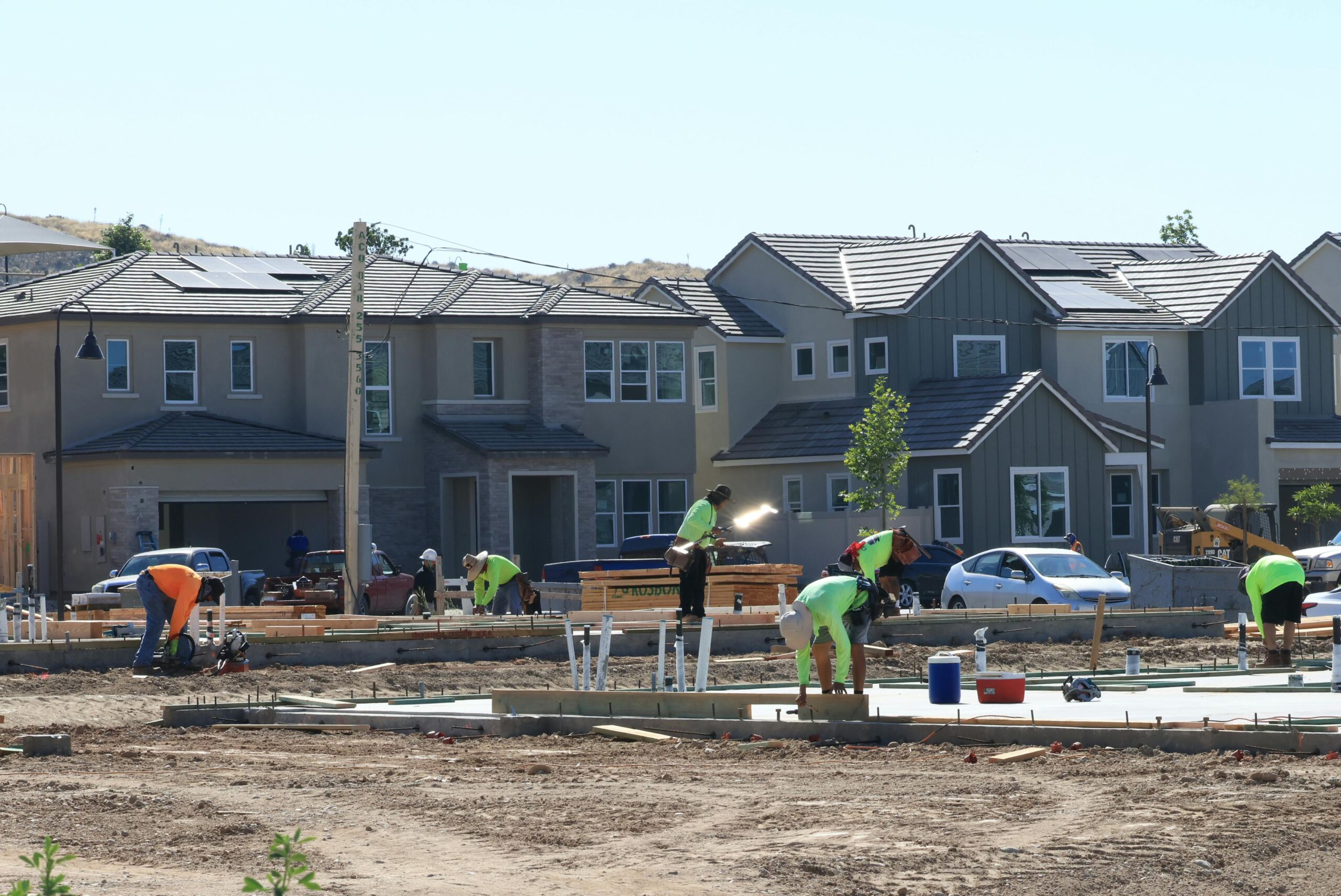
The global housing market is trapped in a "scale paradox." To accommodate the demand for housing, we need to build a lot more homes at pace (we need 4 million homes in the UK alone, yet we are in the longest home-building slump since Covid).
The slow pace is attributed largely to regulatory bottlenecks and financial barriers. And location matters hugely in making housing and land use decisions: to create better environmental, economic, health, and social outcomes, new housing should be prioritised as part of infill or regeneration projects, close to transit, accessible to daily amenities like schools and businesses and GP surgeries and libraries, and so forth.
But what if we could reinvent the types of buildings we want to build, and how we physically built them in the first place?
There is no point throwing up millions of homes that are environmentally catastrophic, whether from a materials, methods, or location perspective. We need a step-change innovation to build good homes faster, without further exacerbating global emissions. We need to accelerate innovation in creating and - crucially - scaling materials that transform the construction cycle, such as intelligent, regenerative, and highly efficient materials. We also need a great leap forward in how buildings are built, incorporating interoperability, 3D printing, and robotics to create faster and more efficient processes.
If we reinvent what and how we build, we could unlock a cascade of innovations to help us build better homes, faster
The Longitude gap
Longitude Prizes incentivise and support scientists, researchers, and innovators to solve big global problems, such as antibiotic resistance or dementia. Rather than slowly chipping away at a problem with incremental progress, Longitude Prizes create paradigm shifts - much like the unassuming clockmaker who solved the problem of navigation at sea in the original Longitude Prize of 1714.
To solve the global housing supply gap, we need lots of change, both incremental and ground-breaking. Bottlenecks exist in all stages of the property development process: land use policy and planning regulations; transport policy and investments; retrofit technology and supply chains; vocational skilling; legal processes and insurance; and the home financing system.
But if we could solve one piece of the puzzle - to reinvent what and how we build - we could unlock a cascade of innovations to help us build better homes, faster.
Innovations in construction
What if we could spark radical change in the types of materials we use to build, transitioning from "less bad" to "actively good"? Currently, our materials are "dead" - they degrade over time. What would it take for housing stock to become an active asset that repairs itself, captures carbon, and generates more energy than it consumes?
We need innovations that move beyond sustainable timber or "green" concrete, such as:
- Scaling the use of materials like lab-grown mycelium, biochar-infused polymers, and carbon-negative geopolymer resins to turn every house into a permanent carbon sink.
- Affordable, scalable production of smart materials that use embedded biomaterials to "heal" cracks or adjust thermal mass based on external temperatures, radically reducing lifetime maintenance costs.
- Materials for roofs and walls that can transform into high-efficiency energy harvesters and water recyclers, turning the house into a micro-utility. If walls can repair themselves and roofs generate power, does the building become a generating “utility” rather than a passive “asset”? How does that change the building industry and its financial model?
We may have the chemistry for these materials, but we lack the industrial manufacturing processes to produce and install them at the speed required for the reality of operating at the scale of a city or region.
What if we could make a radical shift in the methods we use to construct homes? We need innovations that make it quicker and easier to build homes at scale, safely and sustainably.
For example:
- A next-gen step change in modern methods of construction, deploying standardised interoperability of parts across suppliers and manufacturers.
- Automated fabrication methods that use machines to print structure, insulation, and conduits simultaneously using recycled or bio-based "inks."
- Robotic construction methods that deploy autonomous robotic swarms to perform site-layout, bricklaying, or rebar-tying with millimetre precision, removing the need for heavy, expensive machinery on tight urban sites.
If you are interested in taking this from an idea to reality, we are creating a community of experts to shape and design this future Longitude Prize. If you agree with, or disagree with, everything I’ve written, we want to hear from you at Challenge Works. We are running a workshop to discuss this prize idea in June; if you’d like to attend, please get in touch at longitude.prize@challengeworks.org.