
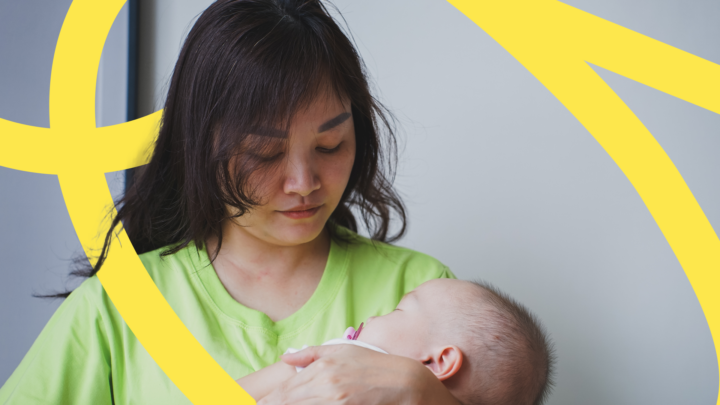
We are pleased to share this guest blog from Kyndall Osibodu. Kyndall is an educator, community organiser, and toddler mom. After an empowering homebirth and a challenging hospital stay, she pivoted to caregiver advocacy, working to support parents and families via systems change and 1:1. Read Kyndall’s blog to learn about her journey into parenthood, and how she thinks society can better support parents and caregivers.
I experienced the heightened vulnerability of early motherhood when my husband returned to work after his leave. He works for the city of New York, and while he has 12 weeks, an exemplary amount by American standards, we decided that he would stagger his time off. When he went back full-time, it was destabilizing. What I experienced in those early days revealed the precariousness of parenthood and that parental well-being is only possible through community and societal support.
The State of Parental Well-Being
A global study on parental burnout has revealed an increase in parental engagement despite a decline in societal support. Parents, especially mothers, are spending more time with their children despite working longer hours outside the home. Furthermore, NIH research has found that, on average, up to 30% of new parents experience loneliness, with the number increasing to as high as 65% in the US. The connection between loneliness and burnout is intricately connected.
If it takes a village to raise a child, it also takes a village to support a parent. To address some of these key challenges, it’s essential to consider our individual capacity to support families. Ask yourself, what networks are you already a part of? What opportunities exist to help parents and families in your community? What can you offer, whether in time or in skill? We often lament the built-in village of the past, but we can still be a part of and build community now. While extended support is the most potent antidote to parental well-being, societal infrastructure also plays a role.
How Society Can Support Parents
The countries that rate the highest in parental well-being tend to share several commonalities, including increased public spending on childcare and family services. In the US, there is considerable energy for caregiver organizing, as well as calls for paid leave, affordable childcare, and improved maternal health. But funding and social safety nets are under attack. If you are an organizational leader or funder working in this space, ask yourself: How is my portfolio of work advancing societal well-being? How are families represented in my work, if at all? What are opportunities to partner with or advocate for parents?
I didn’t know what it meant to be part of the village until I had a child of my own. From my doula to my friends who brought food, those early acts of care sustained me. And now, as a toddler mom, I understand that the needs of parents and families evolve and continue over time.
Each of us has the power to be a part of someone’s village—and when we step into that role, we strengthen not just families, but our communities and society as a whole.