
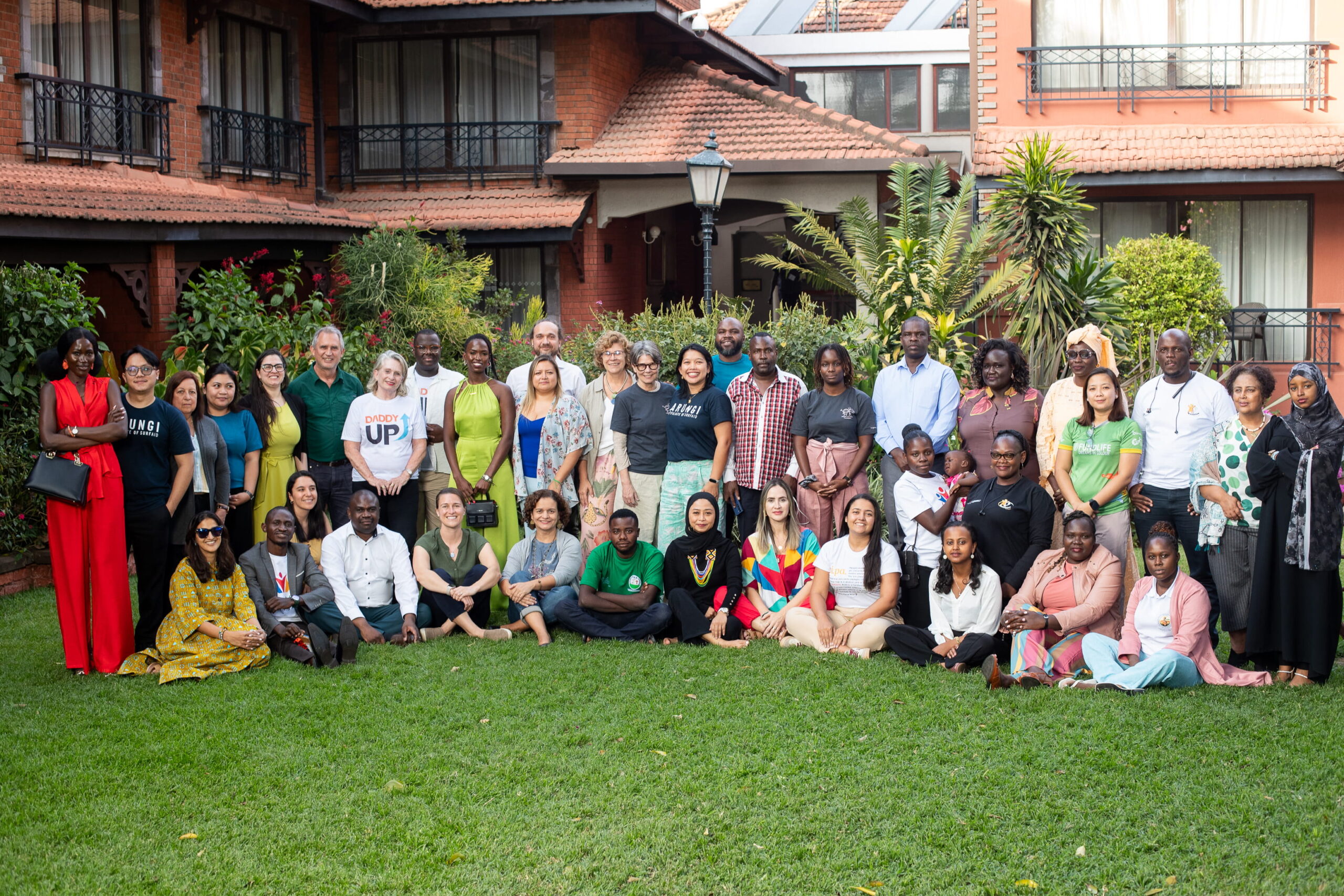
Building on our earlier exploration of solutions for caregiver wellbeing designed for scale, we are now turning the lens inward. In this piece, we explore a critical question: what support do organisations actually need as they test, strengthen, and scale their solutions?
Capital gets a project off the ground, but non-financial support is what keeps it airborne. Too often, funding and capacity-building are viewed as separate tracks, creating friction for innovators trying to balance immediate execution with long-term strategy. The reality is that financial support is only one piece of the scaling puzzle; pairing capital with hands-on expertise in behavioural science, user design, and scaling strategy is what ultimately transforms good ideas into sustainable solutions that drive systemic impact.
The Support Needed to Unlock Scale
Throughout the development phase, clear patterns emerged in the support innovators needed to refine their solutions and prepare for scale:
- Understanding Barriers to Engagement:
What’s stopping communities from using the solution and how do we fix it? Innovators already knew their communities well, but many sought support to understand why target users were not engaging as expected. It is easy for any team to rely on gut assumptions about what users need. Partnering with BIT, teams applied a systematic behavioral lens to move beyond intuition. By mapping complete user journeys and testing core assumptions, they uncovered less visible barriers – from subtle trust deficits and confusing terminology to misaligned outreach strategies.
- Learning What Works
How do we measure impact without overburdening people? Having a great solution is only half the battle; proving and learning from its impact is the other. Across the cohort, there was a widespread demand for support in refining the Monitoring, Evaluation, and Learning framework. Teams needed help streamlining broad ambitions into realistic Theories of Change – pinpointing exactly how daily activities drive short- and long-term outcomes, identifying key risks, and stress-testing core assumptions.
Crucially, BIT and Challenge Works helped teams shift away from heavy, academic evaluation methods toward agile, culturally adapted MEL tools. These low-burden approaches enabled innovators to track early indicators of behavior change without overwhelming time-poor participants, using real-time feedback to continuously refine their delivery.
- Finding the Path to Scale
If the solution works, how can it get to everyone who needs it?
True scale isn’t about growing an organisation or delivering more of the same. It means finding a way for the impact of a proven solution to reach significantly more people, sustainably, without you needing to be in the room every time.
Throughout the challenge, teams experienced a widespread shift in how they defined scale. While many entered seeking simply to expand direct reach, Spring Impact guided them to build durable, structured scaling strategies, by asking:
- What elements of the solution truly drive impact?
- What must stay consistent as it grows, and what can be adapted?
- Who else could deliver or fund the solution at a greater scale?
- What long-term role should the founding organisation play?
Addressing these questions opened up possibilities beyond direct delivery – including partner delivery, technical assistance, social franchising, and strategic ecosystem alliances.
Why Strategic Support Matters
Providing effective capacity-building is not simply about involving several specialist partners. Their expertise must connect, so that innovators receive a cohesive package of support rather than a series of separate interventions.
BIT delivered masterclasses and tailored coaching on human-centred design, behavioural diagnosis and solution design. This helped teams refine their solutions in ways that made sense for the specific audiences and contexts in which they worked – addressing barriers to engagement and encouraging sustained use. BIT also supported teams to develop clearer Theories of Change, identify meaningful indicators and select proportionate research and evaluation methods. This gave innovators practical ways to assess whether implementation was progressing towards their intended outcomes without placing unnecessary burdens on participants or delivery teams.
Spring Impact complemented this work by helping innovators identify and test the critical assumptions underpinning their solutions. Through a test-and-learn approach, teams could use emerging evidence to strengthen their delivery before investing in wider expansion. Spring Impact also helped each team develop a scaling strategy: clarifying what created impact, what needed to remain consistent, what could be adapted, who else could deliver or fund the solution, and what role the innovator should play as it scaled.
Challenge Works provided ongoing support throughout the challenge, helping teams navigate the process and maintain momentum as their solutions developed. Together, the three partners enabled innovators to connect four essential tasks: understanding their audiences, refining their solutions, tracking progress towards outcomes and planning for scale. This made capacity-building part of one continuous learning process – not a collection of disconnected activities.
Empowering Innovation to Go the Distance
Innovation thrives on the freedom to fail safely and the tools to pivot fast. By combining flexible capital with hands-on support in behavioral science, user-led evaluation, and scaling strategy, the Good Start Challenge helped 22 finalist teams move past initial assumptions and build solutions grounded in real-world needs.
On 3 September 2026, six standout teams were officially named winners of the Good Start Challenge. Their success highlights a vital truth: pairing flexible funding with dedicated capacity building is what unlocks truly scalable, systemic impact.
Explore the winning cohort and read the full announcement here.