
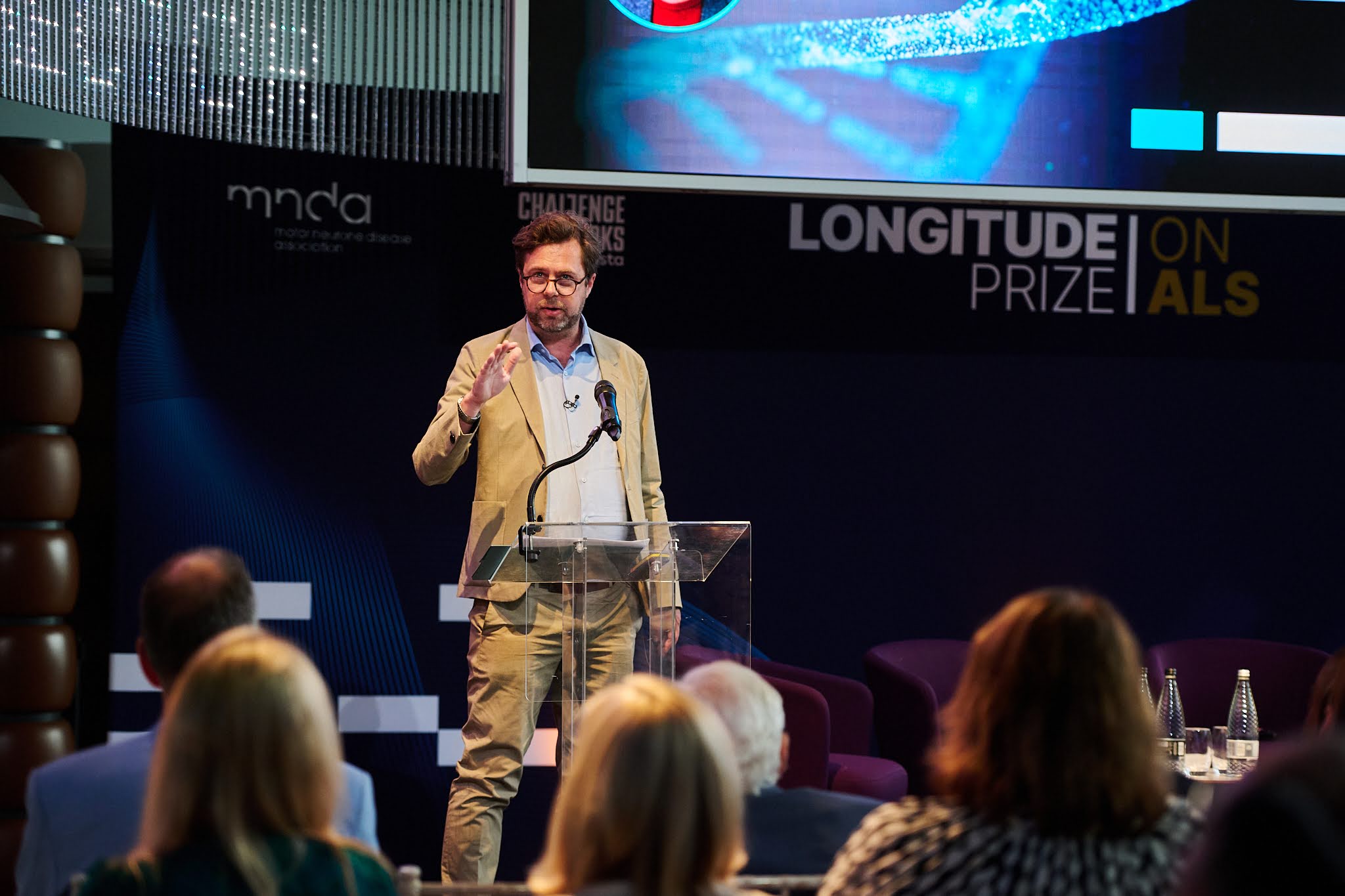
We’ve recently launched the search for the topic - and sponsor - of the next Longitude Prize.
I’ve been running innovation prizes for more than a decade, more than a hundred in total, awarding almost £400 million to inventors and entrepreneurs. Some of them have been technically ambitious. Some have created huge social or financial returns. Almost all of them have created useful solutions to pressing problems.
Only three of those prizes have been part of the Longitude Prize series- I am immensely proud of these. Longitude Prizes are our flagship - our boldest and most transformational prizes inspired by the original 1714 Longitude Prize, a £20,000 reward established by the British Parliament to solve the fatal problem of accurately determining a ship's longitude at sea.
Now that we at Challenge Works are looking to the fourth, and beyond, I thought this would be a good time to set out what’s special, what’s different: what makes a challenge prize a Longitude Prize?
The nuances of our challenge prizes reflect the complex contexts and priorities of the modern world: often you can’t just pinpoint a quick fix
Longitude Prizes are our flagship - our boldest and most transformational prizes.
There are a few rules of thumb for what topics make good prizes, set out in our Guide to Challenge Prizes: such as having a clear goal for innovators to aim for, or focusing on problems that would benefit from varied approaches and fresh thinking.
With Longitude Prizes we’re looking for something more specific: three clear criteria.
- A measurable step-change goal;
- Relying on a breakthrough in technology;
- Leading to impact of global significance.
Only once these conditions have been met, will the experts of the Board of Longitude, chaired by Professor Dame Wendy Hall, approve the use of the Longitude Prize name.
Our first modern Longitude Prize, on antimicrobial resistance, is a case in point: it targeted, and delivered, the invention of a diagnostic device able to accurately distinguish between viral and bacterial infections in minutes rather than days - a step change in capability. Winner Sysmex Astrego’s device was based on years of R&D work, perfecting the microfluidic technology that underpins their solution. And, as their technology rolls out to healthcare settings around the world, it is becoming part of the global fight against the overprescription of antibiotics.
Across our portfolio of 100+ challenge prizes, we’ve been creative and flexible with the prize method, and that’s been great: for instance we’ve innovated in place-based innovation challenges like the Sustainable Cities Challenge, that seek to move the dial on creating change in complex multi-stakeholder settings.
We’ve also experimented with prizes that incentivise innovative business models that drive scale, like the Afri-Plastics Challenge. We’ve even run sectoral innovation funds in regulated industries, like the Ofwat Innovation Fund.
These might be less eye-catching, or harder to explain, or more incremental than a Longitude Prize, but those nuances reflect the complex contexts and priorities of the modern world: often you can’t just pinpoint a quick fix.
But I think you can get lost in nuance too. It can feel so clever to see the world as a complicated system that we can only hope to tweak, that we don’t stop to ask: can’t we just change it?
Sometimes you can pinpoint something that doesn’t exist, but should. You can ask the bold questions: what if? And why not? What if diagnostic tests could just be delivered in minutes? Why not just search for a cure for ALS?
It’s in that spirit that we’re engaging in the search for the next Longitude Prize. We want to hear from experts and from innovation funders what these bold goals could be.
To start the conversation, we’ve just published 15 provocations for what the next Longitude Prize could be: ideas we’ve had in our team or heard from our stakeholders that we think pinpoint needed solutions, and meet the Longitude Prize criteria.
So if you have expertise - even better, if you think your organisation could sponsor a Longitude Prize - we want to hear from you. Reach out, and keep an eye out for a series of expert workshops we’ll be running through June and July to generate more ideas for what the next Longitude Prize could be about.