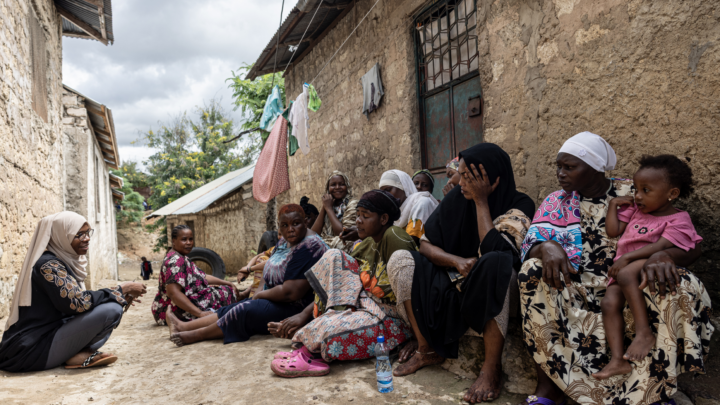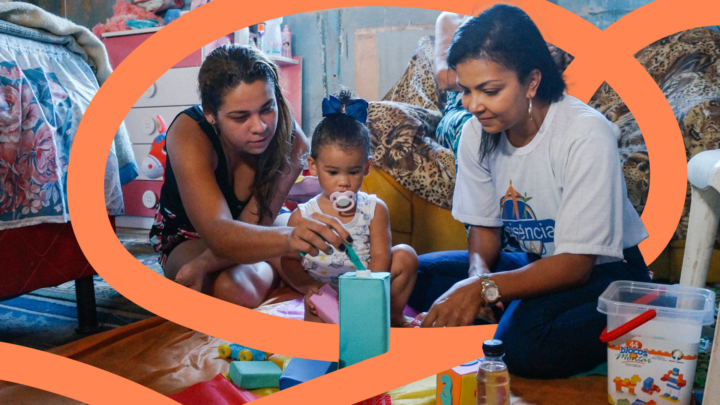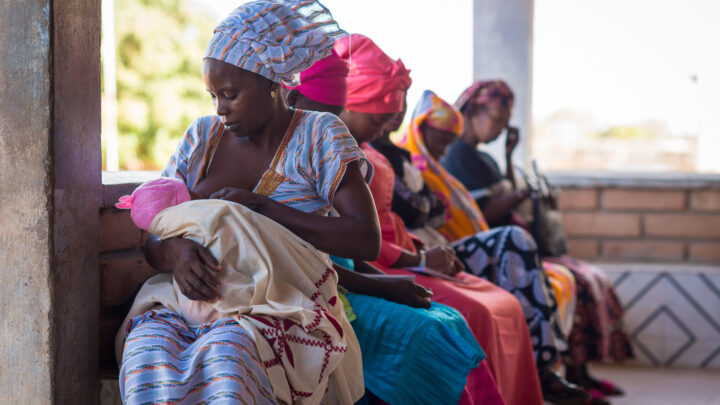
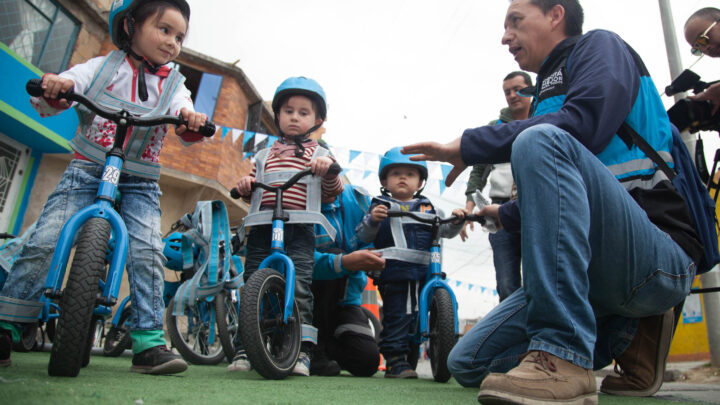
In Leyte, the Philippines, young mothers gather for weekly sessions in their neighbourhoods. Most of them have had to drop out of school due to their pregnancies, leaving them without a steady group of friends. They come for the childcare and the health services, but they also come for the relationships, the relief at being supported during this challenging and joyful transformation in their lives.
These Parent Play Pods, run by FundLife International, are one among many caregiver support initiatives around the world that are weaving social fabric: the interactions, connections, and shared meaning that help individual people become a community.
This matters because we didn’t evolve to raise children alone. Evolutionary anthropologists have shown that, throughout the vast majority of human history, caregiving was both playful and collective, shared among extended family, neighbors, and mixed-age groups (1). And there’s now a mismatch between modern life and what we’ve evolutionarily adapted to need as caregivers. Parents all over the world are raising their children in isolation, whether due to circumstance or expectation. And we’re increasingly realizing that supporting a good start for all children means creating opportunities for the people caring for them to connect with each other.
The Good Start Challenge is funding work that does just this.
The €2.6 million challenge focuses specifically on caregiver wellbeing – not just infant health outcomes or even parent-child bonding, but whether caregivers themselves are “functioning well and feeling good about life.” (2) The 22 finalists – chosen from more than 1,000 entries – are shining a light on what supporting caregiver wellbeing around the world can look like.
And one of the big themes is building community among caregivers – especially for those experiencing the greatest isolation: young mothers who’ve had to drop out of school, displaced families living far from their communities of origin, families affected by mental illness, disability or climate change, or fathers excluded by caregiving norms.
These weavers of community are combining services that meet a tangible need; like childcare, parenting support, counseling, or financial services; physical or virtual spaces where caregivers can meet and connect with each other; and someone whose role it is to help those relationships to form.
The Philippines’ Parent Play Pods are one of 22 finalists. Others weaving caregiver community include:
- Brazil’s Collaborative Care Circle, run by Fundação de Ensino, Pesquisa e Extensão, uses an app where women trade childcare hours and train in responsive caregiving together. The payoff? Women get time back for rest or for other activities, and build connection in the process.
- Uganda’s Parent Playbox Wamu, by Child’s i Foundation and Learn to Play, brings 25 families together every two weeks, including single parents, adolescent mothers, families who’ve been displaced or are struggling financially. Led by trained community workers, they play together using whatever’s locally available.
- Kenya’s CareConnect Circles, by Childline Kenya, supports caregivers dealing with displacement and severe hardship. They get AI-powered caregiving tips through basic mobile phones, access to a 24/7 child helpline, and most importantly, peer support groups where they’re not facing things alone.
- EKISIL’s Solar-Digital SafeHubs sit on the conflict-affected Turkana-Ethiopia border. These community-run solar-powered kiosks give displaced mothers somewhere safe to go and to gather for trauma counseling, parenting advice, and health information.
- Senegal’s CareNet, by JMA Pulsebit Systems and Solutions, links micro-insurance with traditional savings circles (tontines). This makes healthcare affordable for families who couldn’t access it otherwise, while strengthening the community bonds that already exist.
The virtual networks, safe gathering spaces, mutual aid systems, and peer-led programming aren’t add-ons to the “real” work of childcare or health services or parenting skills tools. They’re not choosing between providing services OR building community. They’re recognizing that community IS part of the service.
Research on measuring social change shows that funders struggle to value work where outcomes aren’t immediate and impact can’t be summarized in numbers (3). Funders have long struggled with questions such as: how do you measure trust? Or the relief of no longer feeling isolated? These outcomes take time to materialize, and things like quantifiable health metrics and policy changes are far easier to track.
This is what makes funding community-weaving so challenging. It means valuing the process as much as the results. It means supporting shifts in relationships, trust, and community capacity that enable parents and caregivers to support each other beyond any single program’s timeline.
As Rushda Majeed, Chief Programme Officer at Van Leer Foundation, put it: “When a child is born, a parent is also born – and we’ve seen in our work how much support that transition truly requires.” These finalists understand that parental wellbeing isn’t solely about individual resilience; it depends on having community infrastructure around you.
The Good Start Challenge is funding relationship-building as a valued end in itself, not just a means to other outcomes. Over the coming year, as these finalists deepen their work across Latin America, Sub-Saharan Africa, and Southeast Asia, we’ll learn what becomes possible when funders invest in those who weave the social fabric that supports families.
Sources: