Why Parental Wellbeing is the Ultimate Economic Engine?
How can local innovation support mothers facing the brunt of poverty, weak social safety nets, and climate change? Janet Southern McCormick (Challenge Works) and Elvira Thissen (Van Leer Foundation) reflect on early motherhood – contrasting their own journeys with the stark realities many parents navigate on a daily basis. The obstacles are immense, yet local solutions for parental wellbeing are proving that ground-up innovation can transform both families and economies.
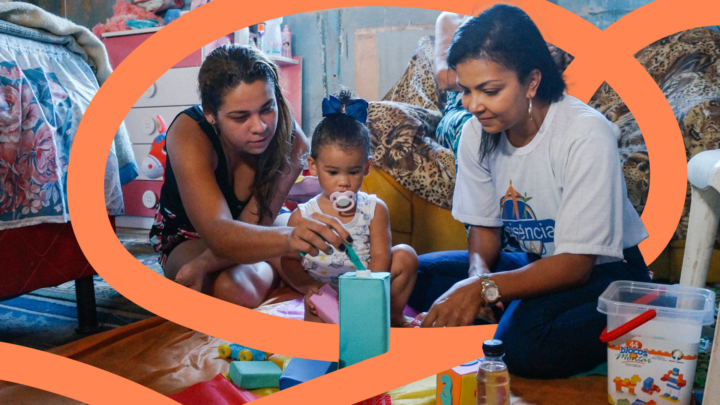
Any new parent will remember the joy and wonder, but also the heavy burden of those first few months of parenthood – the exhaustion, the overwhelming feeling of responsibility for a fragile new life, and the quiet panic of wondering if you’re doing it right. But while our experience was buffered by having a safe home, reliable electricity, running water, and a steady income, millions of parents across the world face that exact same emotional weight while simultaneously fighting a multitude of challenges in their everyday lives.
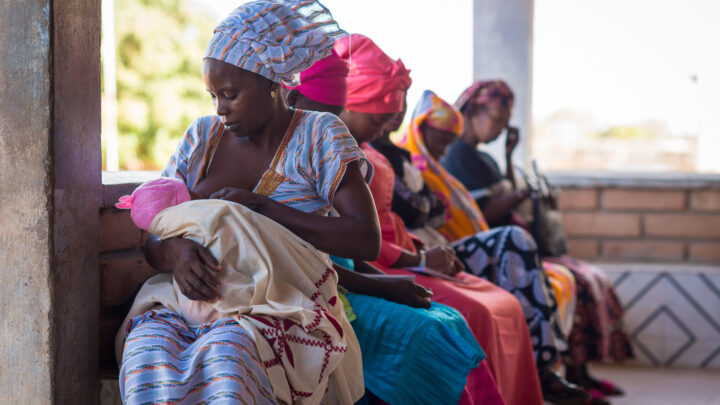
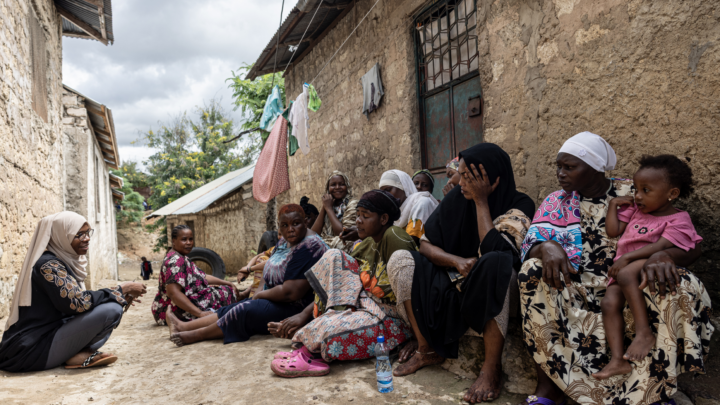
For many, parenthood unfolds amidst acute, compounding pressures – informal labour, economic shocks, climate change, displacement, and weak social safety nets – where mothers disproportionately carry the dual weight of unpaid caregiving and income generation. Living in a constant state of cognitive overload from endless sensory and mental stress leaves caregivers exhausted. Yet protecting parental well-being should not be a luxury concept. It is fundamental for economic resilience and poverty alleviation.
When community networks and structural support mitigate this burden, caregivers regain the crucial mental bandwidth needed to find their balance, organise their lives, and either pursue or enable entrepreneurship or employment, making investment in caregiver support one of the highest-return economic strategies any nation can pursue. A recent study in South Africa found that lifetime costs of perinatal depression and anxiety amount to USD 2.8 billion per annual cohort of births, from losses related to quality of life, income, and public health costs.
Nurturing the Nurturer
As parents, we’ve seen firsthand how an infant acts like a mirror to your internal state: when you are tense or anxious, your child feels it instantly and becomes restless. Science calls this co-regulation.
Therefore, physical health and balanced nutrition, whilst essential, are not enough. Caregivers must be enabled to provide their children with the responsive, nurturing care they need to thrive. A child raised by a supported caregiver is more likely to enter school ready to learn, complete secondary education, and earn higher lifetime wages – breaking the cycle of intergenerational poverty.
Unlocking Parental Bandwidth
Our experience of finding the new ‘normal’ as mothers, and returning to work after becoming a parent would not have been possible without a network of care; whether that was family, peers, childcare, or workplace flexibility. Even then, the transition was difficult. Looking at it this way, it becomes blindingly obvious: when we deprive caregivers of basic support systems, we aren’t just failing families; we are stalling the economic engine of entire communities and nations. Parents everywhere are already some of the most resilient and resourceful creatures out there, so, imagine what would happen if we were to unlock the untapped potential for parents / caregivers and the wider communities and societies that depend on them?
“At its core, parenting is an act of radical hope. Whether in Bogota, Nairobi, or London, every parent wants the exact same thing: for their child to grow up safe, healthy, and equipped to reach their potential.”
Innovation for parental wellbeing
Operating on the notion that when a child is born, a parent is also born, the Good Start Challenge was created. It is a €2.6M global initiative supporting innovators across Kenya, Uganda, Ethiopia, Senegal, Indonesia, the Philippines, Brazil, Colombia, and Mexico to advance solutions for parental and caregiver wellbeing.
From more than a thousand global entries, 22 finalists were selected to receive €50,000 each and a package of capacity building support to refine and scale their solutions. Among these, six exceptional innovations stood out for their ability to deliver low-friction, deeply resonant support and have been selected as the winners of the Good Start Challenge. Each team will receive €200,000 to continue to scale their solutions regionally and beyond:
GENFAMI (Colombia): Culturally grounded support and ancestral wisdom for Afro-descendant teenage mothers.
PIPA Institute (Brazil): Empathetic listening, personalized guidance, and support networks for mothers of young children.
Foundation for Mother and Child Health Indonesia, (Indonesia): Community health cadre-led psychosocial support in climate-affected rural areas.
EKISIL CBO (Kenya/Ethiopia): Solar-powered digital SafeHubs providing trauma counseling in refugee border communities.
StrongMinds (Uganda): Embedding trauma-sensitive mental health care directly across refugee journey points.
Atou Nutrition and Heights and Minds Foundation (Senegal): A community-rooted parenting ecosystem giving mothers time, confidence, and safe care spaces.
Looking at the work of the Good Start Challenge innovators, we can’t help but reflect on what every parent instinctively looks for: a safe space, a trusted neighbour, a reassuring voice when things feel overwhelming. Innovations like EKISIL’s Solar SafeHubs or GENFAMI’s peer networks aren’t just programmatic interventions – they are the modern, structural realisation of the ‘village’ every parent needs to survive and thrive.
Rebuilding the “Village” for Economic Growth
Across the world parental wellbeing isn’t an adjunct to economic growth – it is the very bedrock upon which resilient societies and future workforces are built. Reimagining how we care for new parents is the single most effective way to guarantee a good start for children and an empowered future for all nations.
At its core, parenting is an act of radical hope. Whether in Bogota, Nairobi, or London, every parent wants the exact same thing: for their child to grow up safe, healthy, and equipped to reach their potential. By funding and scaling caregiver support, we aren’t performing an act of charity – we are honouring that universal promise and building the resilient foundation our global economy urgently needs.